
Holy Trinity


The Church

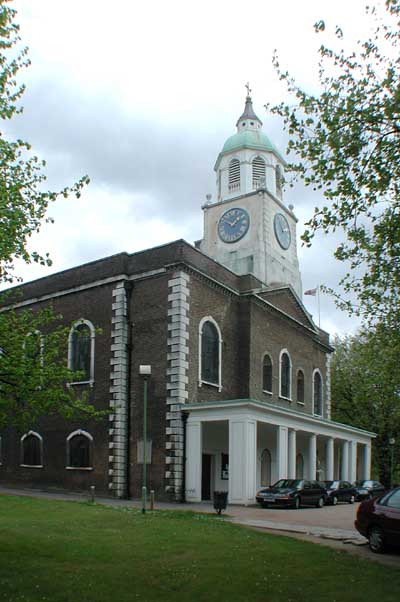
The church of Holy Trinity, Clapham, is located to the south of Clapham Common North Side. 1774-6 by Kenton Couse. West porch built in 1812 by Francis Hurlbatt. Apse replaced by chancel, with Lady Chapel to south and vestry and offices to north, 1902-3, by Beresford Pite. Restoration following damage suffered during Second World War. Further internal adaptations by Purcell, Miller, Tritton in 1991-4: the west end screened beneath the gallery, a central platform created, and the Lady Chapel converted into the William Wilberforce Centre.

Stock brick classical church with stone quoins, window surrounds and cornice. Hurlbatt's single-storey Doric porch across west end. Two storeys. Arched windows. West front of five bays, the central three bays contained within a pedimented projection at first-floor level.

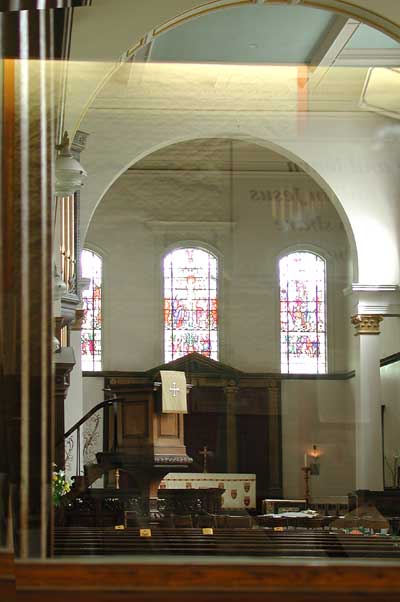
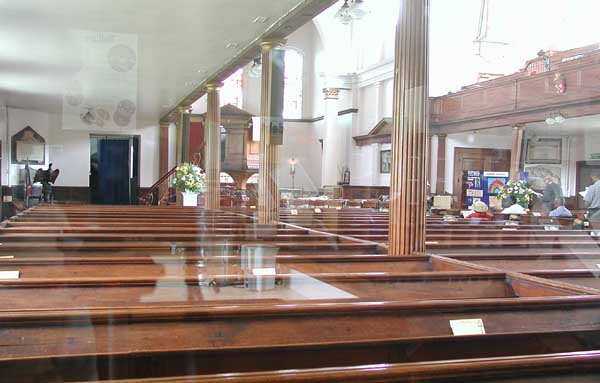
Galleries on three sides on fluted wooden Doric columns, reached by staircases to north and south. Coved ceiling with simple decorative plasterwork (restored 1981). Across the west end, a glazed screen of 1992. Panelled dado. At east end the 1776 reredos stands behind the high altar of the 1902-3 chancel. In north part of chancel, early-C20 organ by Alfred Hunter, a local organ-builder and one of the churchwardens of Holy Trinity. Stained glass of 1952 in east windows commemorates members of the Clapham Sect and their work. Monuments include wall tablet to Bishop John Jebb, d.1833, with medallion bust, by E. H. Baily; wall tablet to John Venn, d.1813; and at the east ends of the north and south galleries, a striking pair of wall tablets, each in the form of a column, one to John Castell, d. 1804, the other to John Thornton, d. 1790 (the monument erected 1816), by J. Bacon Jun. Original box pews replaced in 1875. Original benches remain, steeply banked, in galleries. Simple carved pulpit of 1776; originally three-decker, reduced by A. W. Blomfield. Communion table of 1776.

REASONS FOR DESIGNATION - Grade 2* listing:
The list entry for the church of Holy Trinity, Clapham, which is already designated at Grade II*, has been amended for the following principal reasons:
* Plain classical church of 1774-6, exemplifying the characteristics of the 'preaching box', with original galleries
* Original building by little-known architect Kenton Couse modified effectively in the C19 and early C20
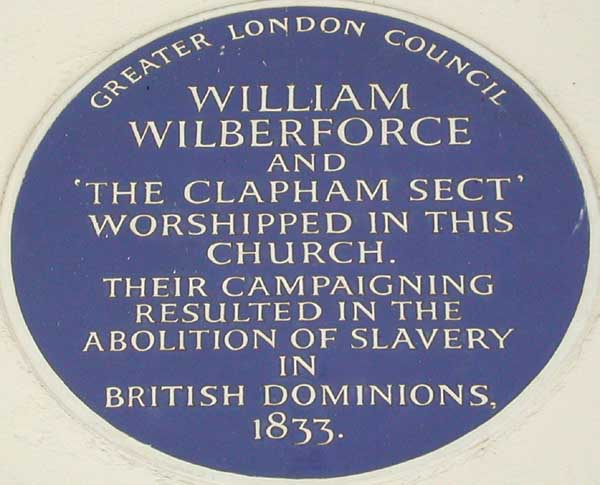
* Strong connection with the Clapham Sect, a group active in campaigning for the abolition of the slave trade, adds to historical interest of building. This amendment is written in 2007, the bicentenary year of the 1807 Abolition Act.
 

FURTHER EXTERNAL & INTERNAL PICTURES REQUIRED PLEASE

Dove's reference for the bells:

ACCESS :

Map reference  :  

Pictures kindly supplied by John Salmon


Please see our Home Page for important copyright notice

Up Arrow

-----------------

email logo

SEARCH THIS SITE

PicoSearch


  Help

This site has been constructed by, and remains the copyright of, its authors,
Edwin and Sheila Macadam,

Shelwin, 30, Eynsham Road, Botley,
Oxford OX2 9BP
© July 2001 -