
|
|
|
You will then need to navigate back to this page using the County Index |

|
Churches which still retain west gallery features or connections |
|||||||||||||||||||||||||||||||||||||||||||||||||||||||||
| *Branscombe, St Winifred |
West gallery "one of the finest and
earliest to be erected in any English parish church, together with a unique
(?!)
stone staircase from the outside of the building to give it access."
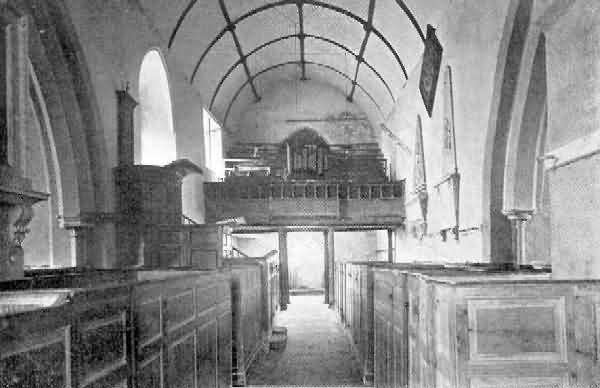
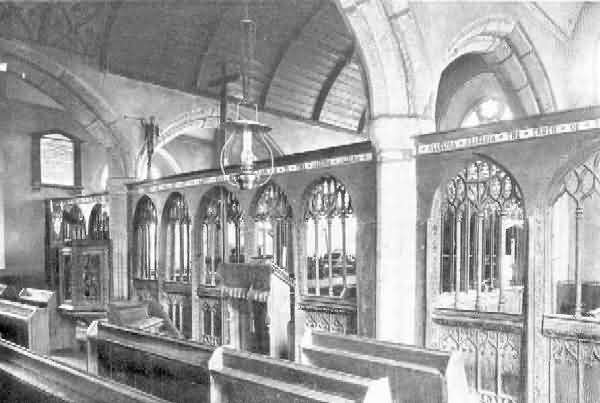
Elizabethan west gallery, altar rails enclosing four sides of the altar, excellent three-decker pulpit (rare in Devon), box-pews in North transept. # (CEPC) See entry below. |
||||||||||||||||||||||||||||||||||||||||||||||||||||||||
| Braunton, St Brannoc | Much Jacobean woodwork - pulpit, reading desk and gallery. 16th C. bench ends. (CEPC) "Organ gallery" 1619. (Pevsner) See entry below. | ||||||||||||||||||||||||||||||||||||||||||||||||||||||||
| Broadhembury, Dedication not known | Has 19th C. west gallery with organ. 1845 west gallery to south aisle built as a private pew. | ||||||||||||||||||||||||||||||||||||||||||||||||||||||||
| *Buckerell, St Mary & St Giles |
"Mediaeval, but Georgian air."
(CEPC) West gallery built for organ in 1907. # |
||||||||||||||||||||||||||||||||||||||||||||||||||||||||
| Cornworthy, St Peter | 15th C. church, with an essentially 18th C. interior. Box-pews, canopied pulpit, altar-piece, clear glass and altered window tracery, much of it done in 1788. Thankfully mostly spared by the Victorians. (CEPC) | ||||||||||||||||||||||||||||||||||||||||||||||||||||||||
| *Cullompton, St Andrew |
Church Perpendicular in style - all
15th and 16th C., the tower was completed in 1549. Jacobean west gallery.
(CEPC) West gallery 1637. 16 figures = four evangelists and 12 apostles. Organ installed 1826. Second gallery at west end of Lane's aisle removed 1850. |
||||||||||||||||||||||||||||||||||||||||||||||||||||||||
| *Dartmouth, St. Petrox |
Church was rebuilt in Gothic style,
1641 - 42, with much woodwork of that time. Jacobean gallery front with turned
balusters lines the tower and has been re- used as a war memorial.
|
||||||||||||||||||||||||||||||||||||||||||||||||||||||||
| *Dartmouth, St. Saviour |
1633 gallery. Woodwork is said to
have come from a Spanish galleon, but seems doubtful.
There are several references to organs on the church accounts, buhere are two references to music:
|
||||||||||||||||||||||||||||||||||||||||||||||||||||||||
| Denbury, St Mary the Virgin | The church still has a west gallery, with seats remaining behind the present organ for the use of the old quire, which is recorded as comprising at least a violin, clarionet and bass viol, and sometimes a flute and/or bassoon. | ||||||||||||||||||||||||||||||||||||||||||||||||||||||||
| Dunsford, St Mary | Church was rebuilt 1641. Jacobean gallery front with turned balusters lines tower and has been used as a war memorial. (No record in Pevsner) | ||||||||||||||||||||||||||||||||||||||||||||||||||||||||
| Exeter, St. Martin | 17th/18th C. west gallery has arms of Bishop Trelawney (1688-1707, as well as the Royal Arms. | ||||||||||||||||||||||||||||||||||||||||||||||||||||||||
| Exeter, St Thomas | Fittings are said to be worth a visit - but are they west gallery period ?? | ||||||||||||||||||||||||||||||||||||||||||||||||||||||||
| *Gittisham, No recorded dedication |
18th C. gallery.
Also box-pews, ceiled roofs and hatchments. An 18th C.
atmosphere in a Perpendicular style church. (CEPC)
(No ref. in
Pevsner.) First used on Good Friday 1701 (? - check date.) # |
||||||||||||||||||||||||||||||||||||||||||||||||||||||||
| Hemyock, St Mary | West Gallery installed in 1847, which replaced two earlier galleries. Otherwise the church has changed little structurally since the 14th C. | ||||||||||||||||||||||||||||||||||||||||||||||||||||||||
| Honiton, St Paul |
Prior to the building of
St. Paul's, the medieval Parish Church of Honiton was St.
Michael's, situated at the top of Church Hill, somewhat
distant from the developing town. By the early 1830's it was
felt that there was need for another church in the centre of
the expanding community. Consequently the foundation stone of
St. Paul's was laid on October 28th, 1835 and the building
erected on the site of the old All Hallow's School chapel.
|
||||||||||||||||||||||||||||||||||||||||||||||||||||||||
| Ipplepen, St Andrew |
Pulpit - thought to
be two-decker, but need details
|
||||||||||||||||||||||||||||||||||||||||||||||||||||||||
| *Kentisbeare, St Mary |
West gallery 1632, repainted 1704. Given by
Anstice Wescombe, wife of Robert Wescombe. Verses painted on the front:
Anstice late wife of Robert Wescombe here |
||||||||||||||||||||||||||||||||||||||||||||||||||||||||
| King's Nympton, St James the Apostle | Part of the church dates from Saxon Times. Below the site of the former west gallery, the Quire pews form an unusual raked unit at the west end, and are deep enough for players to sit with their singers. | ||||||||||||||||||||||||||||||||||||||||||||||||||||||||
| Molland, St Mary |
18th C. gallery. (No ref. in
Pevsner). # On the Exmoor foothills. An unremarkable 15th C. church on the outside; inside a peaceful Georgian oasis in the desert of the 2oth Century. Plastered and whitewashed. Three-decker pulpit (unsafe), high box-pews. ceiled roofs. Chancel cut off by rustic 18th C. 'screen' with tympanum above. Good mural monuments - like pictures on the wall - to the Courtenays (17th and 18th centuries), who lived at West Molland. (CEPC) The church has welcomed gallery music from the early days of the WGMA. |
||||||||||||||||||||||||||||||||||||||||||||||||||||||||
| Newton St Cyres, St Julitta & St Cyriac | 18th C. canopied pulpit, but the box-pews were replaced in 1914-1921 during an "otherwise inoffensive restoration". (CEPC) | ||||||||||||||||||||||||||||||||||||||||||||||||||||||||
| Ottery St Mary, St Mary | Minstrels' gallery and good 18th C. pulpit. | ||||||||||||||||||||||||||||||||||||||||||||||||||||||||
| Parracombe, St Petrock | A completely unrestored and complete Georgian interior, everything is irregular and just as it was 250 years ago, with box-pews, screen with tympanum above, hat-pegs, text-boards, mural tablets to local yeomen. Whitewashed walls and ceilings, some 16th C. benches | ||||||||||||||||||||||||||||||||||||||||||||||||||||||||
| Poltimore, St Mary |
The church
has a courtyard of cobbles
(apparently dated 1743). Tower is corbelled out at the top. Clerestory in the nave - unusual for Devon. South aisle a Victorian addition. In the south transept a squire's pew above a Jacobean monument. |
||||||||||||||||||||||||||||||||||||||||||||||||||||||||
| Sandford Dedication not known |
Jacobean.
1657. West gallery returned a little down both aisles.
". . . yet the form still purely Jacobean". (Pevsner) |
||||||||||||||||||||||||||||||||||||||||||||||||||||||||
| *Sidbury, St Peter & St Giles | Gallery built 1620, extended 1754. Possible outside stair.Church gallery enlarged in 1754; Nicholas Warren churchwarden at that time. | ||||||||||||||||||||||||||||||||||||||||||||||||||||||||
| *Silverton, Dedication not known | Gallery is dated 1734. 1763 upper gallery built for choir and orchestra. Removed 1860. Also removed at that time the gallery at the east end of the south aisle. | ||||||||||||||||||||||||||||||||||||||||||||||||||||||||
| Tawstock, St Peter |
In the north transept the ceiling is
Italian plasterwork, the windows contain mediaeval glass and there is a
beautiful 16th C. gallery, a manorial pew for the Earls of Bath, carved
bench-ends and monuments of the period. The rest of the church is nearly all
14th C. and is set in the former park of the Earls of Bath. Burman's figure of
Rachel, Countess of Bath (1680) is to be seen, as is the tomb of Lady
Fitzwarren(1589), with its beautiful effigy.
See below. |
||||||||||||||||||||||||||||||||||||||||||||||||||||||||
| Tiverton, St George |
"The best Georgian church in
Devon". (CEPC)
1714-1730. Fittings not known. Built by J James
(architect, who also was the architect of St
George, Hanover Square, Piccadilly.
Built 1714-1716 for dissenters used as warehouse instead fitted out 1727 -33 for Anglicans. Yellow sandstone symmetrical north &south doors shallow chancel & low West tower. Barrel vault ceiling Segmental coffering over altar 3 galleries west added 1842 when other 2altered. Columns with piers above galleries with Ionic capitals.3 sided graceful. Communion rails, panelling round chancel, pillastered ionic pieces flank pedimented panels containing inscriptions. Cartouche with lion mask and Diocesan arms is original on west gallery. (Philip Shepherd) |
||||||||||||||||||||||||||||||||||||||||||||||||||||||||
| Torbryan, Holy Trinity |
18th C. box-pews encase earlier
benches, and have brass candle-holders. Many 15th C. fittings in a typical
Devon style interior, although the Perpendicular style exterior gives no
indication of what lies within.
|
||||||||||||||||||||||||||||||||||||||||||||||||||||||||
| Trentishoe, St Peter |
Gallery dated 1771. Hole in gallery
panelling for bow of double bass.
|
||||||||||||||||||||||||||||||||||||||||||||||||||||||||
| Uffculme, St Mary the Virgin | The 17th C west gallery lasted till 1928 when the organ was moved, and was rebuilt in its present position. Timber and panels from the old gallery were incorporated in the screen which now secures the ringing chamber. Box pews survived until 1972, when major remedial works resulted in the present layout, which gives ample room for instrumentalists. See below. | ||||||||||||||||||||||||||||||||||||||||||||||||||||||||
| Upton Hellions, St Mary | Georgian pulpit. | ||||||||||||||||||||||||||||||||||||||||||||||||||||||||
| Upton Pyne, Church of Our Lady | Gallery in tower arch with 18th C. balustrade. | ||||||||||||||||||||||||||||||||||||||||||||||||||||||||
| West Ogwell, Dedication unknown | Jacobean pulpit. | ||||||||||||||||||||||||||||||||||||||||||||||||||||||||
| Widecombe-in-the-Moor, St Pancras | Best known in West Gallery circles because of the various manuscripts which have survived from this parish. | ||||||||||||||||||||||||||||||||||||||||||||||||||||||||
| Whitestone, Dedication not known | Jacobean gallery - "1621, yet still entirely Elizabethan in style, on turned baluster columns." (Pevsner) | ||||||||||||||||||||||||||||||||||||||||||||||||||||||||
Churches which are known to have had west gallery features or connections |
|||||||||||||||||||||||||||||||||||||||||||||||||||||||||
| Barnstaple, Dedication? | Galleries added 1820, removed 1866-82(NDC) | ||||||||||||||||||||||||||||||||||||||||||||||||||||||||
| Braunton, Dedication? | Gallery in North transept, 1619. Ca. 1870 had 3-decker pulpit and gallery across east end of nave. Vicar has photo! (NDC) See entry above. | ||||||||||||||||||||||||||||||||||||||||||||||||||||||||
| Combe Martin, Dedication? |
The church had a west gallery - no further details known.
(NDC) |
||||||||||||||||||||||||||||||||||||||||||||||||||||||||
| Colyton, Dedication? | Galleries used to stand along both nave aisles; taken down 1897. | ||||||||||||||||||||||||||||||||||||||||||||||||||||||||
|
Crediton, Dedication? |
In 1723 there were galleries at the
west end and in the transepts. Organ installed in west gallery in 1822; removed
1887-9.
|
||||||||||||||||||||||||||||||||||||||||||||||||||||||||
| East Budleigh, Dedication? | In 1810 a barrel organ was installed to augment a consort of bass viol, oboe, clarinet and flute which accompanied the choir. Replaced by organ in 1850. But was this on a gallery? | ||||||||||||||||||||||||||||||||||||||||||||||||||||||||
| Hartland, Dedication? |
In C18 had music gallery against tower arch.
Removed 1848. |
||||||||||||||||||||||||||||||||||||||||||||||||||||||||
| Ilfracombe, Dedication? |
Organ stood on WG,
flanked by choir galleries.
1855 organ enlarged and moved to floor level.
(NDC) |
||||||||||||||||||||||||||||||||||||||||||||||||||||||||
| Great Torrington, Dedication? | Had a west gallery. (NDC) | ||||||||||||||||||||||||||||||||||||||||||||||||||||||||
| Loxbeare, Dedication? |
17th C. gallery - "Jacobean;
fragments reused in the chancel seats." (Pevsner) This implies it is no longer there ? |
||||||||||||||||||||||||||||||||||||||||||||||||||||||||
| Mortehoe, Dedication? | Had a west gallery and box-pews. (NDC) | ||||||||||||||||||||||||||||||||||||||||||||||||||||||||
| North Molton, Dedication? | Galleries removed from West end 1876-83 and organ moved. (NDC) | ||||||||||||||||||||||||||||||||||||||||||||||||||||||||
| Ottery St Mary, St Mary |
Organ was in west gallery; moved
1849. "The nave was soon disfigured with a gallery on the south side . . .
three more galleries were erected in the transepts." (Guidebook) Implies late 16th or early C17th C. Also has medieval stone minstrels' gallery above entrance to Lady Chapel. |
||||||||||||||||||||||||||||||||||||||||||||||||||||||||
| Payhembury, Dedication? | Had west gallery until 1897 restoration. | ||||||||||||||||||||||||||||||||||||||||||||||||||||||||
| Pilton, Dedication? | Old pitch pipe in vestry (NDC) | ||||||||||||||||||||||||||||||||||||||||||||||||||||||||
| Rockbeare, St Mary with St Andrew | The screen was made from the original Jacobean gallery. See below. | ||||||||||||||||||||||||||||||||||||||||||||||||||||||||
| Salcombe Regis, Dedication? | Once had 17th/18th C. musicians' gallery. | ||||||||||||||||||||||||||||||||||||||||||||||||||||||||
| Sidbury, Dedication? | 1670 datestone on outer wall possibly refers to an outside stair for the gallery. Church gallery enlarged in 1754. | ||||||||||||||||||||||||||||||||||||||||||||||||||||||||
| South Molton, Dedication? |
In 1702, a new organ and rood loft [!] By my calculations this leaves the North gallery still in position., Is it?! |
||||||||||||||||||||||||||||||||||||||||||||||||||||||||
| Talaton, Dedication? |
The church had a west gallery until
the 1860 restoration.
In 1824 the singers were paid their annual salary of £2 2s. As late as 1857 the churchwardens tried to stop the practice of the congregation turning to the west for the singing of hymns and psalms, but with little success. |
||||||||||||||||||||||||||||||||||||||||||||||||||||||||
| Tawstock, St Peter |
Gallery to give access to ringing chamber – Late
16th C woodwork, but installed in present position ca.
1870 – was it from a WG? (NDC)
Also see entry for Tawstock above |
||||||||||||||||||||||||||||||||||||||||||||||||||||||||
| Totnes, St Mary |
A gallery added in the
19th C was
reached by steps in a small turret outside the north door.
|
||||||||||||||||||||||||||||||||||||||||||||||||||||||||
| Uffculme, Dedication? | An organ was erected in the west gallery in 1841, and rebuilt in a new location in 1928. The tower screen was constructed in 1931 using panels from the 17th century west gallery. The external stone stair survives at the end of the north aisle. See below. | ||||||||||||||||||||||||||||||||||||||||||||||||||||||||
| Witheridge, Dedication? |
West gallery erected in 1817, but removed towards the end of the 19th century.
"In 1817 a gallery was installed at the back of the church for the musicians and singers, a new cello, flute and clarinet were bought, and the violins restrung." (Church guide book.) (Jackie Patten) |
||||||||||||||||||||||||||||||||||||||||||||||||||||||||
| Woodbury, Dedication? | 1740 panelling was part of the west gallery, which was removed in 1893. | ||||||||||||||||||||||||||||||||||||||||||||||||||||||||
|
Chapels which have or had west gallery features or connections |
|||||||||||||||||||||||||||||||||||||||||||||||||||||||||
| East Budleigh, Salem Chapel, Presbyterian, later Congregational. |
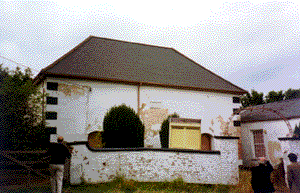
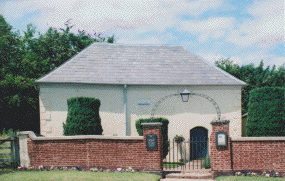
Before and After pictures of the chapel, now restored by the Historic Chapels Trust (2008). Salem Chapel dates from 1719, although A Presbyterian Society met here prior to this. On the edge of the village it is half hidden by a wall with square gate piers and a wrought-iron overthrow enriched with scrolls and a lamp-holder. There is also a schoolroom and tiny graveyard within its grounds. The building is square with a four-hipped roof. The walls are of mixed cob and stone construction, rendered over and secured on stone footings. Facing the road on the south-east side are two panelled doors in low segmental-headed arches. These replace former windows. Higher up is a datestone 'Salem Chapel, built 1719' and the sill is inscribed 'enlarged 1836' when the seating capacity was augmented. Each side wall contains two tall segmental-headed windows. The two tall round-headed windows at the rear date from 1836. Inside, the gallery across the front end dates from 1719. Others were added in 1836 and are supported on slender cast-iron columns with moulded caps. The moulded and bracketed cornice is original. In the centre the vaulted ceiling rises from an iron post which replaced the original timber one and gives great character to the interior. Some earlier box pews remain in the galleries. The 18th century clock is under repair. Visit the Historic Chapels Trust web site at: http://www.hct.org.uk/chapel10ebudleigh.html to whom we are indebted for this information and picture. Download their (Pdf) report here. |
||||||||||||||||||||||||||||||||||||||||||||||||||||||||
| Dalwood, Nr Axminster - Loughwood Meeting House | Old Baptist Meeting House run by the National Trust. Datyes from mid 17th century with 18th century interior. Box pews and musicians gallery. | ||||||||||||||||||||||||||||||||||||||||||||||||||||||||
Churches which had west
gallery features or connections,
as recorded in
|
|||||||||||||||||||||||||||||||||||||||||||||||||||||||||
|
ATHERINGTON.
St. Mary. |
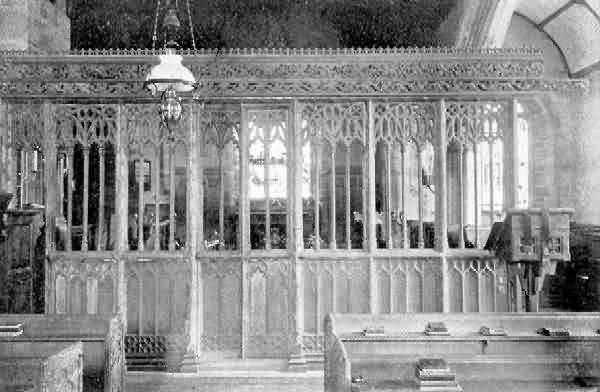
There are two screens, one
separating the chancel from the nave and the other in the
north aisle; the latter, which still retains the loft and
gallery front, is said to be the finest in Devonshire.
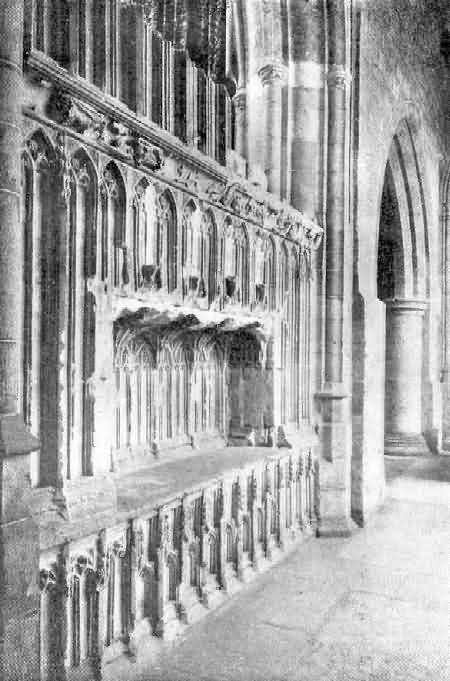
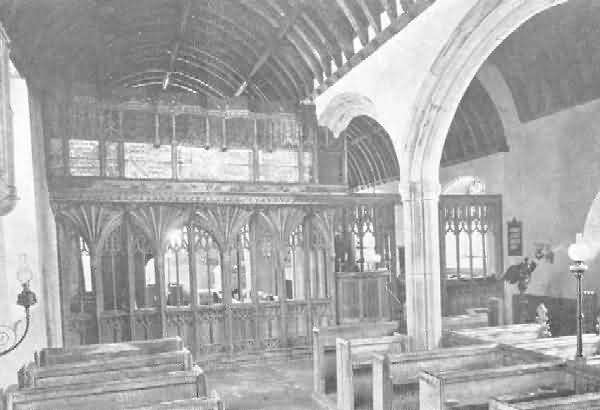
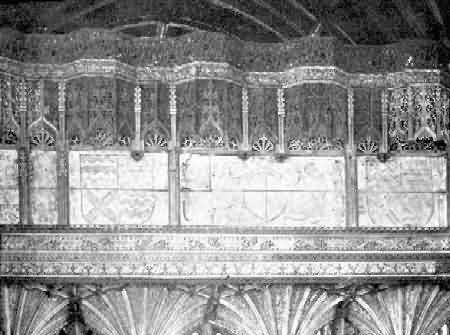
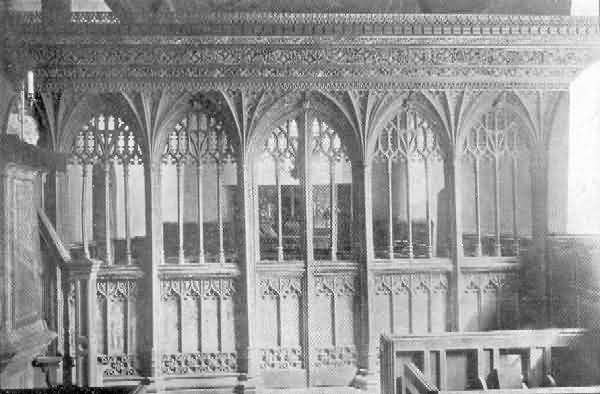
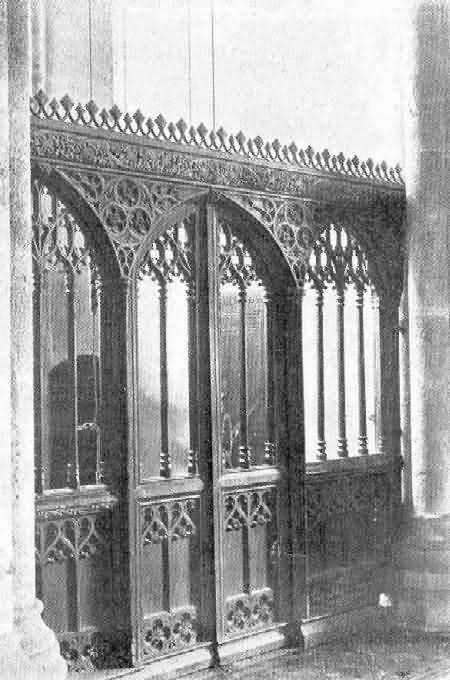
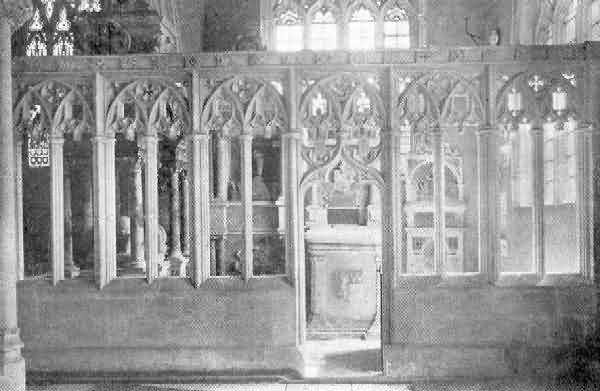
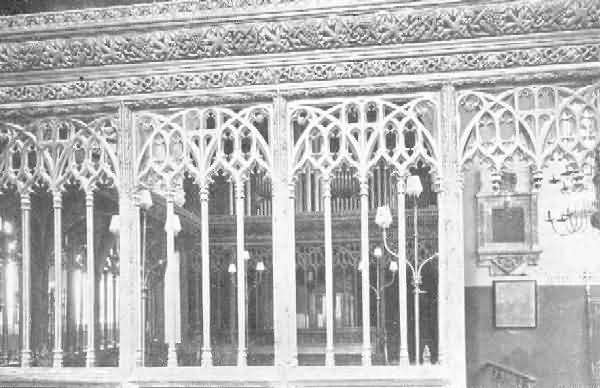
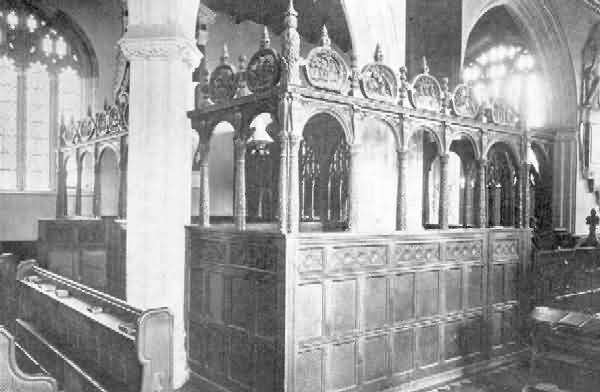
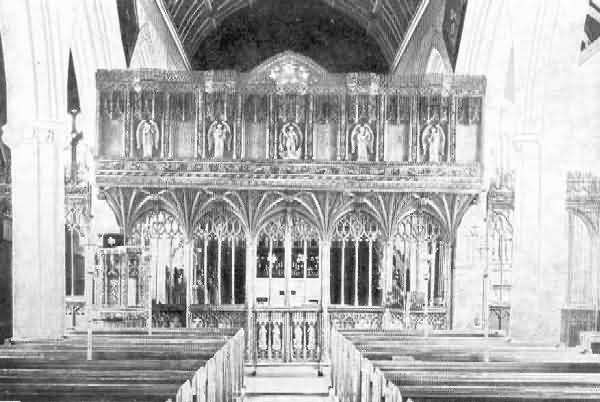
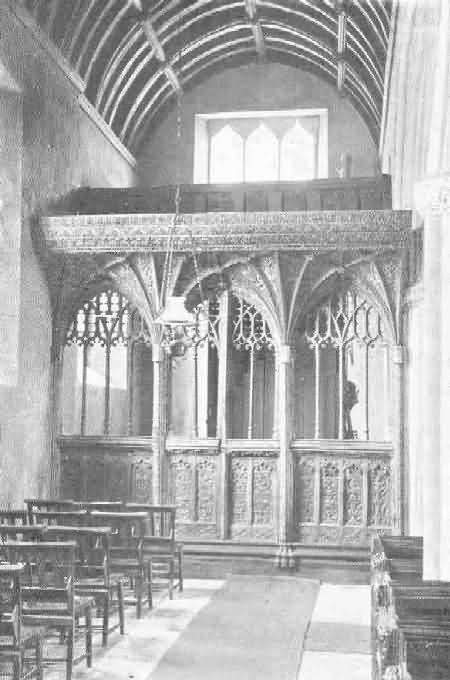
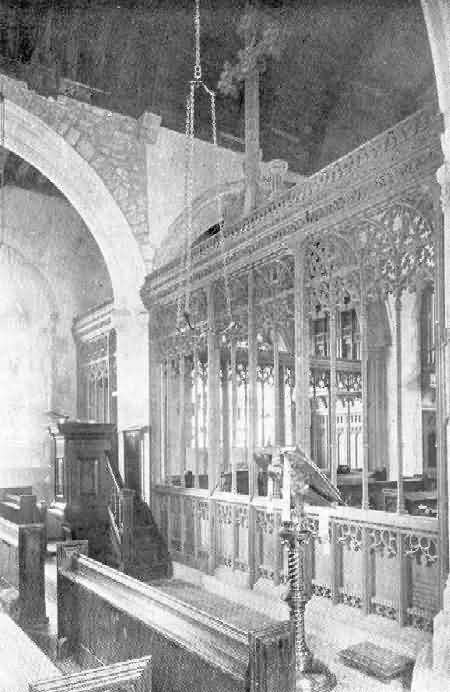
The chancel screen consists of narrow square-headed lights under a horizontal beam, most probably originally there was a horizontal coving to support a loft, as is the case at Willand. In the reign of Elizabeth [1558-1603] an order was made for the removal of lofts to the level of the groining. This order seems to have been pretty generally carried out, which accounts for there being only two examples of the ancient gallery front in Devonshire. Unfortunately, when the lofts were removed the groinings were often taken down as well, hence the large number of screens with a flat surface ornamented with portions of the carving which formerly composed the fronts of the lofts and galleries. In 1880, when the chapel at Umberleigh Manor House was demolished, its beautiful rood screen was brought to Atherington, and erected in the north aisle of the church. It is of unpainted oak, richly carved, the divisions of the fans are filled with beautiful designs, and the fans spring from carved figures of angels holding shields. The original gallery (front and back) remains, the only instance of the original gallery in existence in Devonshire with the exception of the one at Marwood, near Barnstaple, and there only the east side remains. There are projecting canopies on the front of the gallery which formerly held figures, but these were destroyed in 1548. The carving of these canopies is exceptionally fine. The panels underneath the canopies in the time of Elizabeth [1558-1603] were ornamented (?) with the Royal arms, shields, and an inscription running:— "God save the Church, our Queen Elizabeth and Realm, and grant us peace and truth in Christ.—Amen."
|
||||||||||||||||||||||||||||||||||||||||||||||||||||||||
| BICKINGTON, HIGH. St. Mary |
On the south side of the nave
is the vestry occupying the base of what was originally the
tower, but the upper part of the tower was pulled down and a
west tower built many years since. There was at one time a
west gallery, but this has been removed. When the gallery
was taken down some of the old bench-ends at the lower end
of the church were brought from farmhouses in the
neighbourhood and erected at the west end of the nave.
|
||||||||||||||||||||||||||||||||||||||||||||||||||||||||
| BOVEY TRACEY. St. Thomas à Becket. |
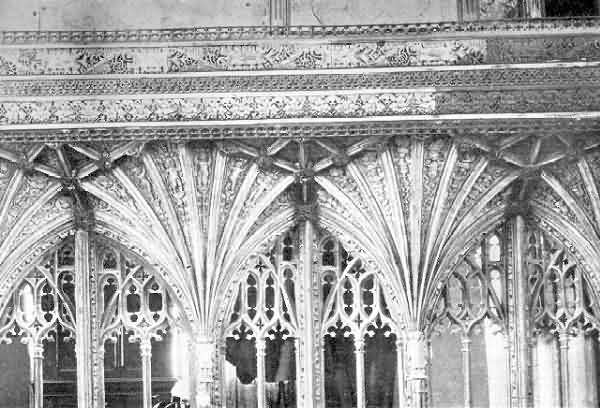
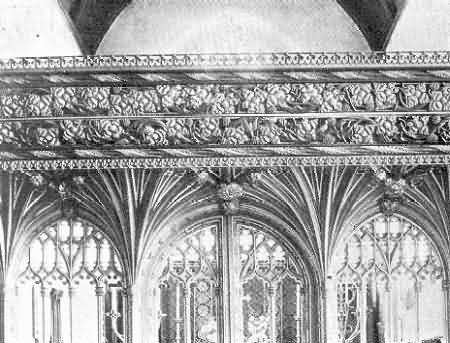
The rood screen [plate
24a], said to date from 1427, has a good
cornice with two rows of leaves and fruit [plate
24b]. The upper part was destroyed during
the Commonwealth [1649-1659], the lower part and painted
panels alone escaping demolition. Dr. Oliver says that in
his time the screen was "overtopped with a tasteless and
unseemly gallery." This has been removed, and the screen and
chancel were thoroughly restored about 1884, when the
missing groining of the screen was reconstructed.
|
||||||||||||||||||||||||||||||||||||||||||||||||||||||||
| BRANSCOMBE. St. Winifred |
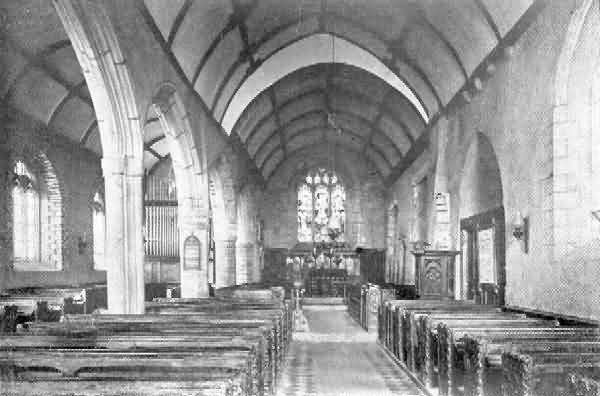
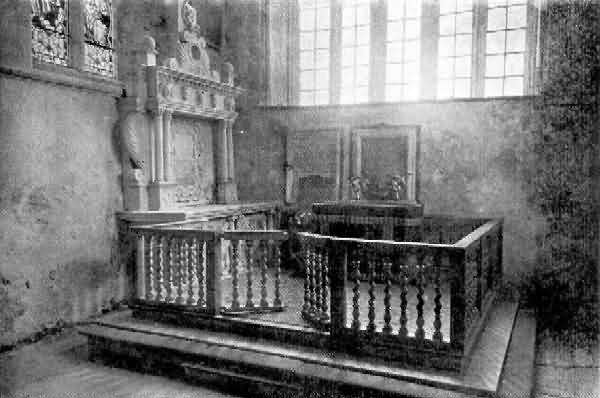
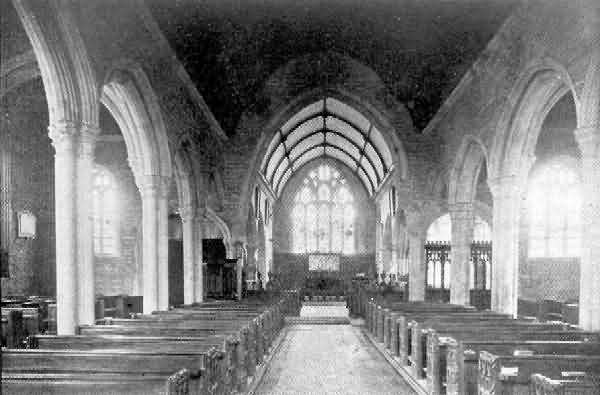
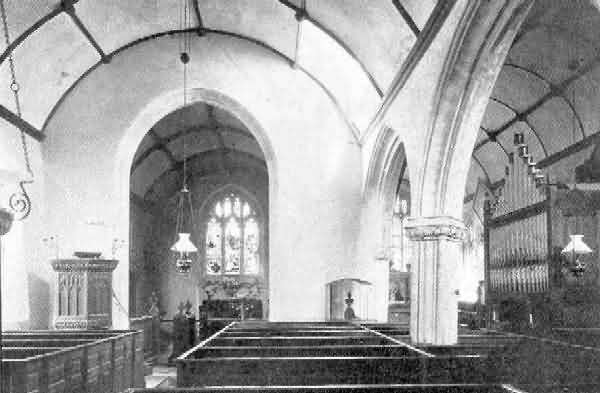
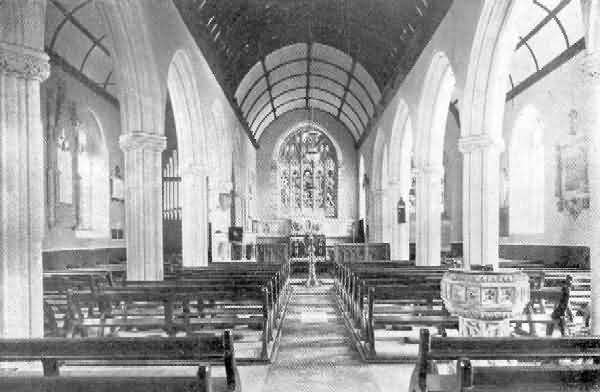
SY195884 The church [plates 30a and 30b] is cruciform, consisting of chancel, with priest's door, nave, north and south transepts, south porch, and central tower with six bells. There is an old western gallery, entered by an exterior staircase, and in the nave an old «three-decker» pulpit, probably the only one remaining in Devonshire. The altar has old railings in the front [plate 30c], on the south side, and partially at the back and on the north side; it appears as if the altar at one time had been placed further west, and been entirely surrounded by railings. On the arch of the nave are hung the Commandments, Lord's Prayer, and the arms of George IV [r. 1820-1830]. The gallery front is carved, there are old high-backed pews, and the church has evidently not been restored for a great many years.
|
||||||||||||||||||||||||||||||||||||||||||||||||||||||||
| BRIXHAM. St. Mary. |
The north transept contains monuments of the Yarde and Buller families. It is now enclosed by a wooden screen, there was formerly a family pew in a gallery in this transept, the pew has been removed to the ground-floor, and the front of the gallery used for the front of the pew. There is a piscina with shelf in the east wall. At the west end of the aisle is a tombstone with the inscription:— "Weep not for me you standers by NB. These words appear only infrequently in funeral hymns, their author not being so far traced. The most often remembered setting is by a Shropshire nurseryman called John Moore, and can be found in his manuscript book dating from about 1835. We carried out a serious search for this tombstone in the summer or 2007, and could not locate it. Opinion differed as to where it might have been, but the most likely place would appear to be at the west end of the south aisle, now covered by a carpet. Locals who remembered the floor before the carpet was laid, thought otherwise!
|
||||||||||||||||||||||||||||||||||||||||||||||||||||||||
| BROADHEMBURY. St. Andrew |
At the west end of the aisle
there is a gallery with a stone front, and there is a wooden
gallery at the west end of the nave.
|
||||||||||||||||||||||||||||||||||||||||||||||||||||||||
| BUCKERELL. St. Mary and St. Giles |
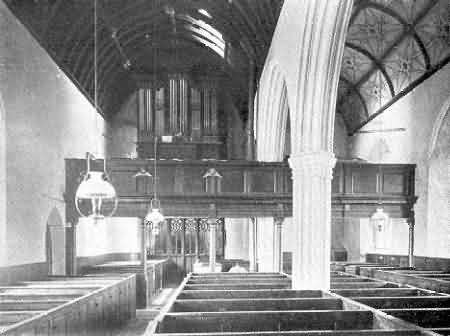
The nave has a plastered wagon roof with bosses of no particular merit. There is a piscina in the chancel; a west gallery with organ, an old pulpit, and font, and the old box pews. In the north wall of the nave is a niche for a statue, but the figure is missing.
|
||||||||||||||||||||||||||||||||||||||||||||||||||||||||
| BUCKLAND-IN-THE-MOOR. St. Peter |
In 1907 the church was
restored, and the old box pews removed. The screen has also
been restored [plate 42a]. Many guide
books mention a carved wooden staircase to the rood loft;
how this mistake arose I do not know, as there is the usual
staircase built in the north wall, and I was told there
never had been a staircase in the church.
|
||||||||||||||||||||||||||||||||||||||||||||||||||||||||
| BUCKLAND MONACHORUM. St. Andrew |
The nave roof has finely
carved figures of angels playing musical instruments. In the belfry are the Ringers' Rules as follow:— "We ring the Quick to Church, the Dead
to Grave http://www.wissensdrang.com/stabb037.htm There are two curious epitaphs in the churchyard, one to a blacksmith is as follows:— "My Sledge and hammer both declined
|
||||||||||||||||||||||||||||||||||||||||||||||||||||||||
| CLYST ST. LAWRENCE. St. Lawrence. |
The church consists of chancel, nave, south porch, and west tower. There is a screen of five bays across the chancel [plate 61], retaining its ancient colouring and gilding, but the tracery has all been removed from the bays and the ancient cresting has been replaced by a plain wooden one; at one time it must have been an exceedingly fine screen. There is a gallery in the tower arch, and on each side of the arch are carved grotesque heads. The arms of Charles II [r. 1660-1685] are preserved beneath the gallery. Some box pews.
|
||||||||||||||||||||||||||||||||||||||||||||||||||||||||
| COLYTON. St. Andrew |
The church consists of
chancel, nave, north and south aisles, and central octagonal
tower. The east end of each aisle is screened off, forming a
chapel. There is a priest's door in the chancel, and
piscinas in the chancel, and north and south chapels. The
south porch at one time had a parvise, but when there was a
gallery in the south aisle an exterior staircase was made to
give access to the parvise, and from thence to the gallery.
This gallery has now been removed, and the parvise is used
as a small gallery looking into the south aisle. The tower
is reached through an exterior doorway to the south by means
of a staircase and wooden gallery crossing the interior of
the south aisle, and not adding to its beauty. The west
window is fine, reaching almost to the ground, the doorway
forming part of the window; the doorway is old, but the
tracery of the window has been replaced with new, the part
taken out being preserved in the east end of the churchyard.
|
||||||||||||||||||||||||||||||||||||||||||||||||||||||||
| CORNWORTHY. St. Peter |
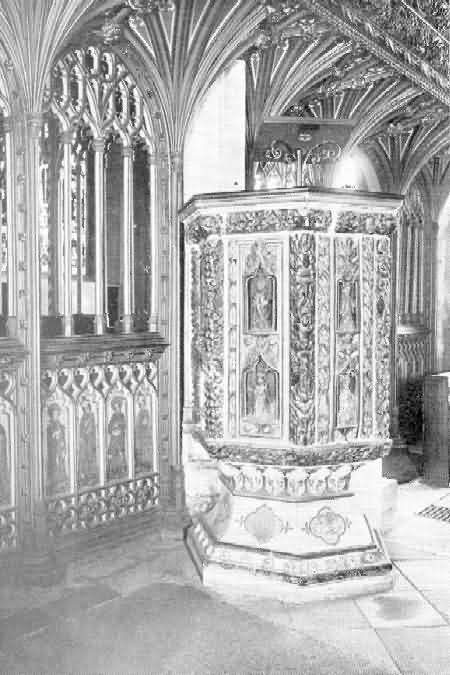
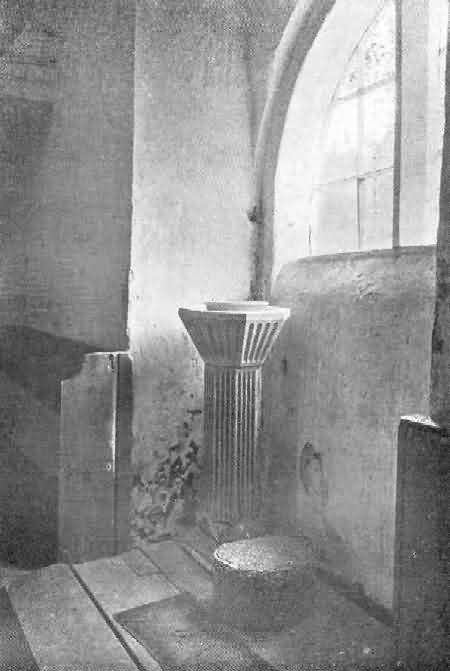
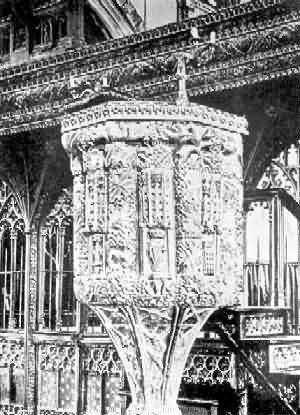
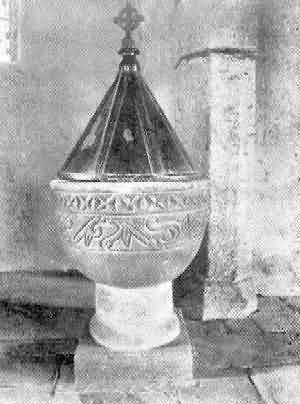
In the north aisle is the old sounding board of the pulpit, with angel and trumpet on the top; the pulpit has been removed to the usual position. The font is circular, has two rows of carving, and is supported on a shaft with spreading base [plate 71b].
|
||||||||||||||||||||||||||||||||||||||||||||||||||||||||
| CRUWYS MORCHARD. Holy Cross |
This church serves as the
private chapel of the Cruwys family, who have owned the
Manor House adjoining from at least the time of King John
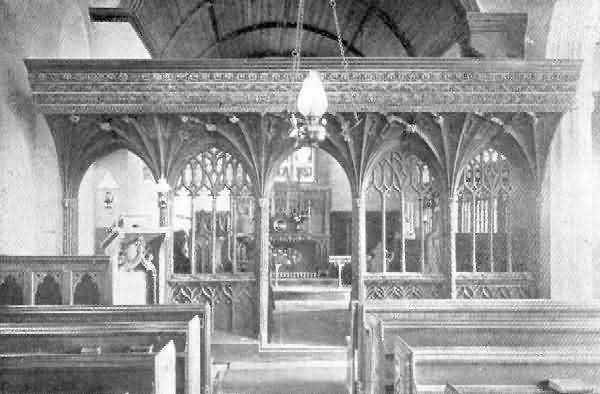
[1199-1216]. The church consists of chancel, nave, south aisle, south porch, and an embattled west tower with six bells, dating from 1721 to 1765. The church was struck by lightning in 1688, when the steeple was shattered and the bells melted. The principal object of interest in the church is the fine Georgian chancel screen of Corinthian design [plate 74]; the type is uncommon in Devonshire, the only two in any way resembling it being those at Ermington and Washfield. This and the parclose screen are well carved, and in a good state of preservation. Over the chancel doorway is the crown resting on a cushion. There are return stalls in the choir.
|
||||||||||||||||||||||||||||||||||||||||||||||||||||||||
| DARTMOUTH. St. Saviour |
The north and south galleries
have been removed, and the arms of the old merchants of the
town, which formerly adorned their front.
The north and south
galleries have been removed, and the arms of the old
merchants of the town, which formerly adorned their fronts,
have been placed on the front of the west
gallery.
|
||||||||||||||||||||||||||||||||||||||||||||||||||||||||
| DEAN PRIOR. St. George |
The church [plate 80a] consists of chancel, nave, north and south aisles, divided from nave by five arches, resting on octagonal pillars with plain capitals, and west tower. The church will always be noted for its connection with the poet Herrick [1591-1674], who was vicar of the parish from 1629 to 1674; he was ejected by the Puritans, but was reinstated at the Restoration [1660]. In the church is a handsome brass erected to his memory in 1857 by a relative, William Percy Herrick, of Beav Manor Park, Leicestershire. There is a good circular font of red sandstone [plate 80b], the bowl has two bands of carving and rests on a short shaft; it is of Late Norman date, and probably belonged to the original church, which is supposed to have been built and endowed by the Fitz-Stephen family about the middle of the 12th century. There are no remains of the rood screen, which was removed prior to 1866.
|
||||||||||||||||||||||||||||||||||||||||||||||||||||||||
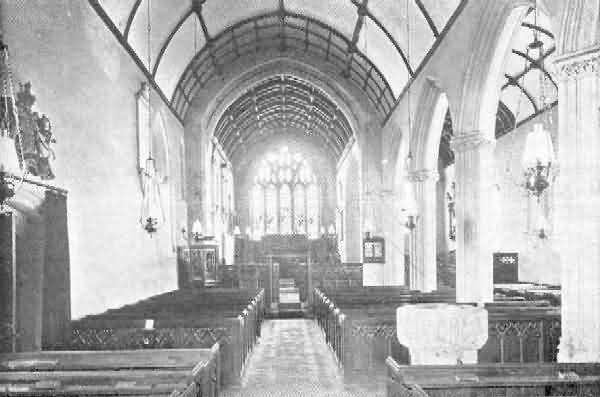
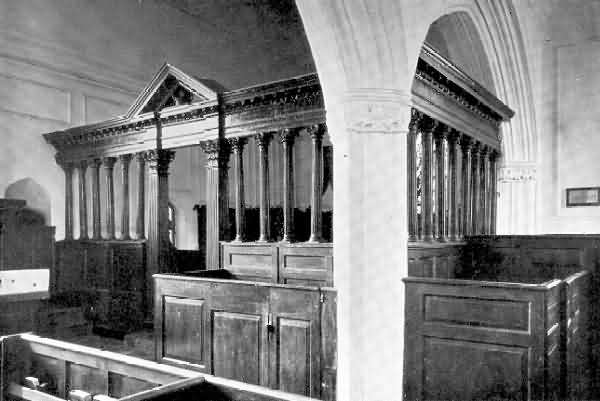
| DUNSFORD. St Mary |
The church consists of
chancel, with piscina and priest's door, nave, north aisle,
south porch, and west tower with six bells. There is a west
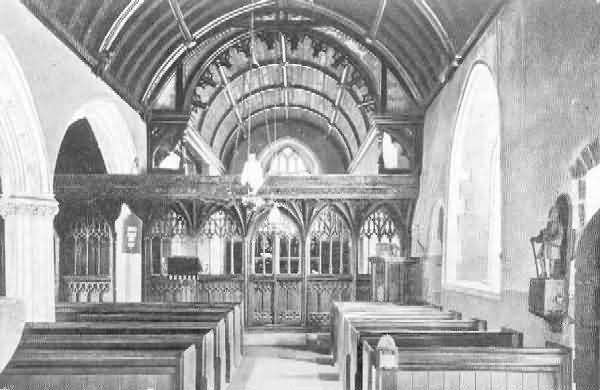
gallery with organ, and beneath the gallery an oak screen
across the tower entrance.
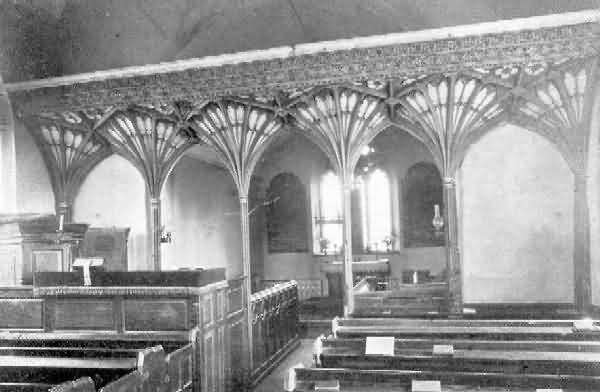
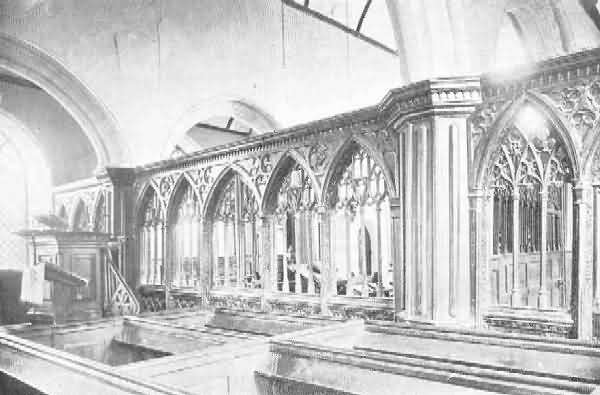
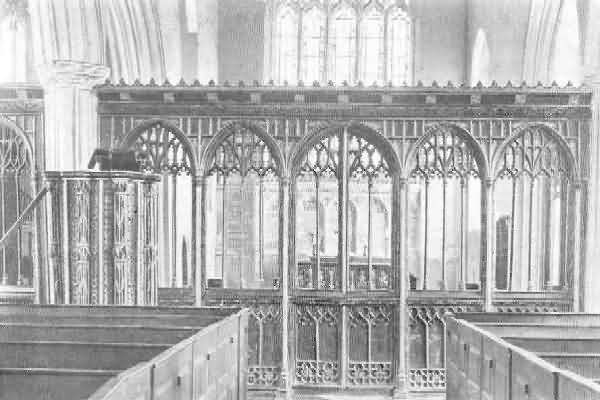
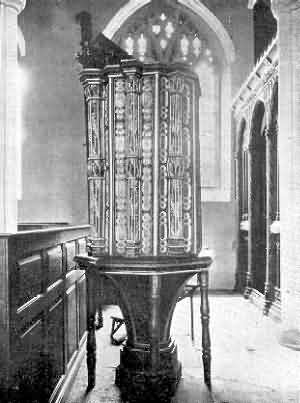
The church also retains one of the old west galleries [plate 92b] which are so rapidly disappearing under the hand of the restorer.
|
||||||||||||||||||||||||||||||||||||||||||||||||||||||||
| EXBOURNE. St. Mary. |
The church consists of
chancel, with priest's door, nave, south aisle divided from
nave by three arches, resting on granite monoliths, south
porch, and west tower. The arch of the tower is said to be
the most ancient portion of the existing building, it most
probably dates from the 13th century. In the chancel wall is
an opening, apparently a piscina, but too low for that
purpose as the floor level is at present; probably the
chancel floor has been raised. The church has been restored and has some good modern carved bench-ends, amongst the subjects will be found: the emblems of the Passion; a grape vine; the thistle; the arms and initials of Archbishop Temple [elected 1896]; H. E. R. Exon (Bishop Ryle); V. R. I. 1837-91. The seats were given by Miss Hole in memory of Emily Francis Hole, widow of the Rev. Nathaniel John Brassey Hole, Rector of Broadwood Kelly. The south aisle retains its high pews. The pulpit is old, it bears the date 1665, a peculiarity about it is that it is entered direct from the vestry.
|
||||||||||||||||||||||||||||||||||||||||||||||||||||||||
| EXETER. St. Martin |
The old church was dedicated
on July 6th 1065, but of this church there are no remains.
The present building dates from the 15th century, and
consists of chancel, nave, and north tower, with one bell
dated 1675. The chancel is divided from the nave by an arch,
on the north side of which is a niche for an image, but the
figure is missing. The west gallery dates from the 17th
century; on the panels are angels with trumpets and the arms
of the City of Exeter, the Royal arms, and the arms of the
See of Exeter. The altar is surrounded on three sides by rails [plate 98a], and on the north and south sides are seats for the communicants. When nearly every church had its chancel screen, altar rails were not so necessary, but in Elizabethan days [ca. 1560-1600], when the rood screens were removed, the need became apparent. Objections were raised early in the 17th century to the rails being placed round three sides of the altar, and in the days of [Archbishop] Laud [elected 1633; executed 1645] it is common to find instructions for the rails to be placed across the chancel from north south. There are a few survivals of the three-sides rails in Devonshire, of which St. Martin's is one. We have here also the seats at each side of the chancel for the communicants; a great change from the time when the only seats in the chancel were the sedilia for the officiating priests. The west gallery dates from the 17th century; on the front are panels bearing the Royal arms, those of the See of Exeter, and of the City of Exeter. The wall behind the altar is panelled and has the Creed, Lord's Prayer, and Commandments, and shields with the arms of the See of Exeter, and the arms of the Hooper family.
|
||||||||||||||||||||||||||||||||||||||||||||||||||||||||
| FENITON. St. Andrew |
The church was restored in
1887, the reredos is modern, and was erected in memory of
Mary Pinckney, May 8th 1891. In the vestry is preserved the
old sounding board of the pulpit, which has been converted
into a table. The old west gallery has been removed, and the
organ, which formerly stood there, has been placed in a new
organ chamber built out from the north wall of the nave; the
dormer window which gave light to the gallery still remains.
|
||||||||||||||||||||||||||||||||||||||||||||||||||||||||
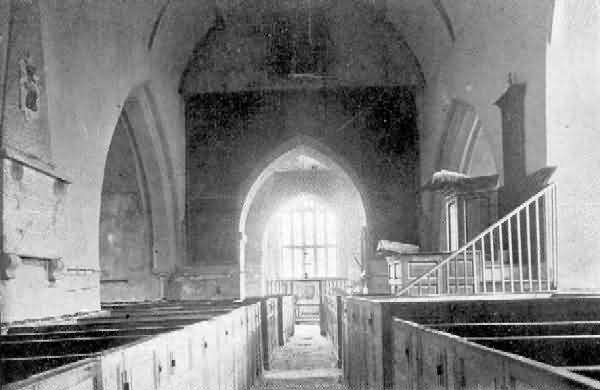
| GITTYSHAM. St. Michael |
The church [plate
109] consists of chancel with priest's door on the north
side (the chancel is separated from the nave by a narrow
arch), nave, south aisle, north porch, and west tower with
three bells. There is a west gallery entered by an exterior
staircase through a doorway cut in the south wall of the
tower. There is a hagioscope on the south side of the
chancel arch, and some remains of old glass in the north
window in the chancel. On the capitals of the pillars of the
aisle are the arms of the Beaumont family. The double rose
is conspicuous among the bosses in the roof of the aisle,
which appears to have been erected towards the end of the
reign of Henry VIII [1509-1547].
Box pews.
|
||||||||||||||||||||||||||||||||||||||||||||||||||||||||
| HEMYOCK. St. Mary | The church consists of chancel, nave, north and south aisles, south porch, and west tower. There is a piscina in the south aisle, and hagioscopes on each side of the chancel arch, and there is a gallery at the west end of the church. The church was largely rebuilt in 1847 and does not contain much of interest, except an old Norman font, having an old bowl on a new base; it does not rank amongst the best specimens of its class. | ||||||||||||||||||||||||||||||||||||||||||||||||||||||||
| HENNOCK. St. Mary |
The church consists of
chancel, nave, north and south aisles, south porch, western
tower and a western vestry. The church, with the exception
of the tower, was entirely rebuilt about 1450. The original
decoration of the portion of the roof over the rood screen
still remains and is in a good state of preservation. The
screen is of good Perpendicular work of 15th century date
[plate 117a]. The groining and cornice
were probably removed in 1758. The doors remain and most
probably have paintings on the panels, but these are
obliterated by a coating of oak paint. The other panels owe
their preservation to the high backed pews which were put in
the church in 1758.
|
||||||||||||||||||||||||||||||||||||||||||||||||||||||||
| HITTESLEIGH. St. Andrew. | The nave is separated from the aisle by four arches, supported on granite monoliths. The corbels of the tower arch appear to have been carved, but they have been so scraped it is impossible to make out what the carvings were intended to represent. There are no old monuments, but in the aisle is a tombstone bearing date 1568. The square Norman font [plate 119] has a kind of zigzag pattern cut round the four sides, and is supported on a low circular shaft resting on a square base. The church retains the old box pews, and the west doorway has the old openings in the walls for the bar fastening for securing the door, and so has the priest's doorway; the latter is rather unusual | ||||||||||||||||||||||||||||||||||||||||||||||||||||||||
| HOLCOMBE BURNELL. St. John the Baptist | The church retains its old box pews. | ||||||||||||||||||||||||||||||||||||||||||||||||||||||||
| HOLCOMBE ROGUS. All Saints |
The Bluett pew [plate
122] which occupies a prominent position
in the north aisle, and measures 18ft. 8in. by 10ft. 10in.,
is well worthy of notice. It is surrounded by a Jacobean
screen, surmounted by a cornice of medallions elaborately
carved with Scriptural subjects, depicting scenes from the
Creation to the delivery of the Law on Mount Sinai.
|
||||||||||||||||||||||||||||||||||||||||||||||||||||||||
| ILFRACOMBE. Holy Trinity | The old pews were removed in 1857. | ||||||||||||||||||||||||||||||||||||||||||||||||||||||||
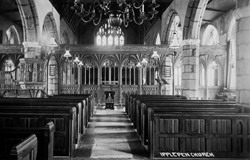
| IPPLEPEN. St. Andrew. |
The font and the beautifully
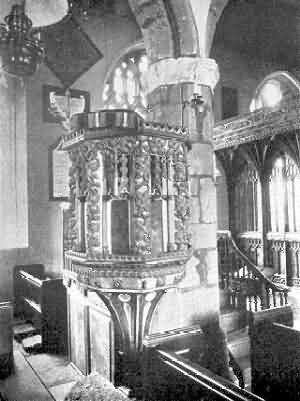
carved oak pulpit [plate 134b] are of
15th century date; the latter is is adorned with four
tabernacled niches, with crockets and finials, but the
figures which formerly occupied the niches are gone. The
tower and east window of the south chapel belong to the
Decorated period. The south door, porch and parvise over are
Early English, and were probably erected about 1300. The
chancel window by Kempe has recently been filled with
stained glass and represents: (1) Christ in Glory surrounded
by angels; (2) The Incarnation; (3) Christ as Bishop of
Souls commissioning St. Peter and St. Paul. In 1872 the
chancel was restored; in 1883 the organ and west gallery; in
1892 general restoration and removal of square pews
. . .
|
||||||||||||||||||||||||||||||||||||||||||||||||||||||||
| KENTON. All Saints |
The western gallery was
removed in 1861, and the church restored in 1866.
|
||||||||||||||||||||||||||||||||||||||||||||||||||||||||
| KINGSTEIGNTON. St. Michael |
The church [plate
142a] consists of chancel, with piscina
and priest's door, nave, north and south aisles, separated
from nave by five arches on each side, supported on
clustered pillars with carved capitals, south porch, and
west tower with six bells; the old bells dated 1766, 1774,
1726, 1623, 1746; there is a gallery beneath the tower.
|
||||||||||||||||||||||||||||||||||||||||||||||||||||||||
| LOXBEARE. St. Michael and All Angels. |
The pulpit is Jacobean with
canopy. Over the south door are the Royal arms with the
inscription:—
John Payne, Warden. Johannes Gill, The church has been re-seated; in the old seats, the last seat to the west on the south side had an opening in the back, through which it is said the parents passed the child before baptism. This must have been a survival of a heathen custom. The present rector, the Rev. W. M. Fairbairn, anxious to preserve all that was ancient in his church, has had this opening reproduced in the new seat, but, owing to an error of the architect, a top rail was introduced which was not in the original. The west gallery has been removed, and portions of the carved front used in the choir seats. There is on the outside of one of the pews, on the north side of the church, a curious slab of wood, which can be drawn out to form a seat, this the Rev. W. M. Fairbairn had preserved on the re-seating of the church. It is called an «Apprentice's Seat», and the apprentice sat outside the family pew.
|
||||||||||||||||||||||||||||||||||||||||||||||||||||||||
| MARWOOD. St. Michael and All Angels |
There are remains of an
exceptionally fine rood screen erected in 1520. Early in the
last century [19th] the vicar removed the chancel section,
and all that is now left is the portion in the north aisle
consisting of three bays [plate 158a].
The ancient gallery back remains, but only a small portion
of it can be seen, as the chapel is used as an organ
chamber, and the screen is hidden by the pipes of the organ.
The gallery front on the west side was removed about 60
years since [ca. 1850].
|
||||||||||||||||||||||||||||||||||||||||||||||||||||||||
| MOLLAND. St. Mary |
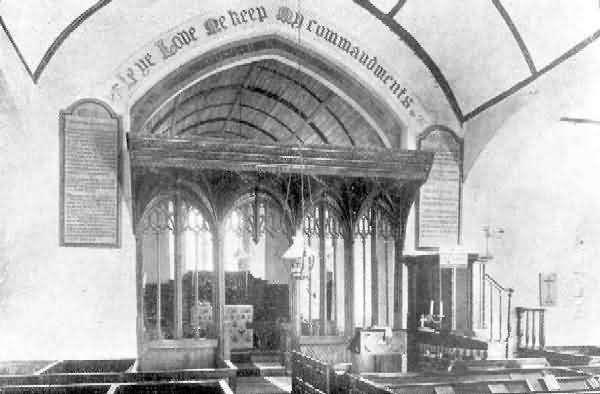
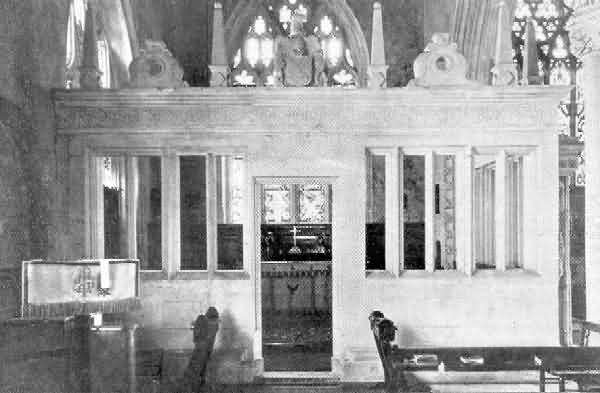
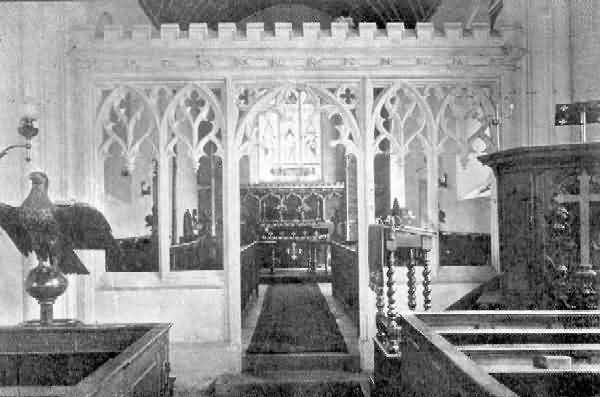
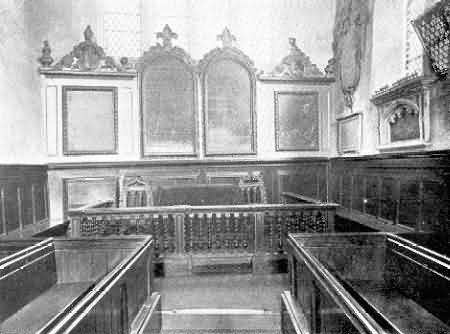
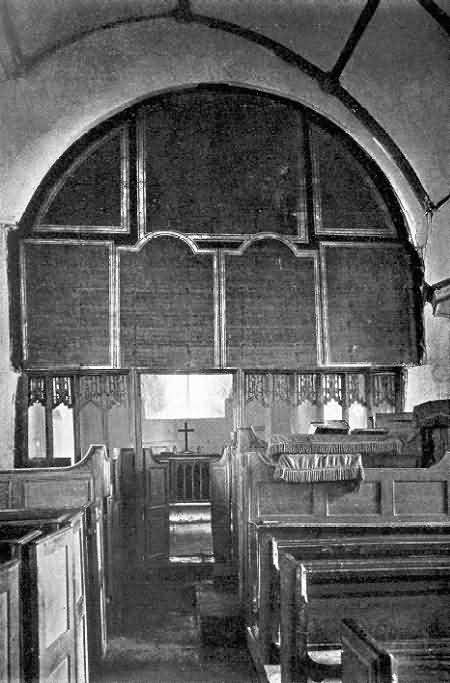
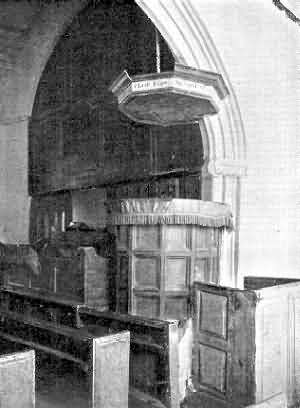
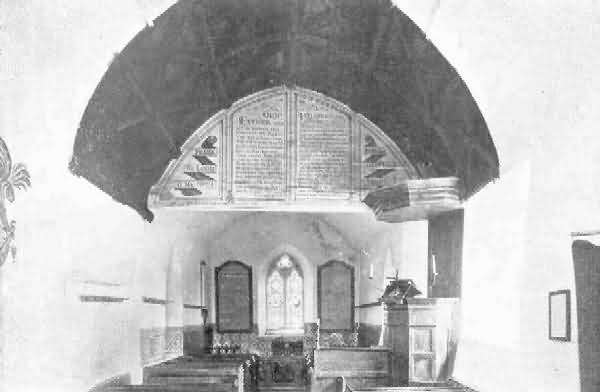
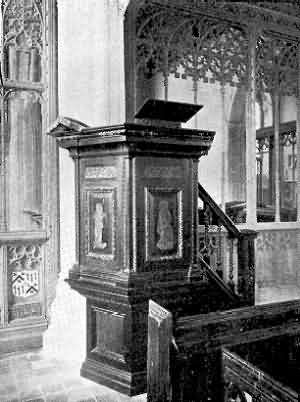
The church is Perpendicular, consisting of chancel, nave, north aisle, south porch, and embattled west tower with clock and four bells (the tenor weighing 16 cwt.) dated (1) 1562; (2) Mediæval; (3) 1700; (4) Mediæval. Charles Pearson, M.A., in his Ringer's Guide to the Church Bells of Devon says, "the treble (1562) has a curious inscription, 'Hic jacet Magister Johannes Cooke', twice backwards. Perhaps it was taken in wax from a tombstone for ornament merely. The third has 'Santie Nichola ora pro nobis' in modern letters and coats of arms. The second in black letter, 'gif to sancta maradous' which is unintelligible." The third was clearly recast in 1700, the Mediæval inscription being preserved. In the church there is a memorial to the Rev. O. Barry, who was vicar of the parish; he was persecuted for his attachment to the cause of Charles I [r. 1625-1649] and died in 1683, aged 45 years. This church shares with that at Parracombe the distinction of retaining the complete chancel enclosure of the post-Reformation type; with the exception of these two, there is no church in the county where this interesting feature remains [plate 161a]. There is a screen with folding gates and an open framework on either side, surmounted by a plastered tympanum, completely filling the chancel opening. On the west face are two large tablets bearing the Ten Commandments and a panel between with the Royal arms; there are also inscribed the names of I. Mogridge, Churchwarden, and Rowlands, Painter, with the date 1808. Before the Reformation these tympana were covered with paintings of Scripture subjects, the «Doom», or Last Judgment, being often depicted. At the Reformation [ca. 1550], when it became the custom to remove from the churches all outward signs of spiritual things, these paintings were taken down, or in some cases whitewashed over, and in their place were hung up, or painted on the surface, the Royal arms, the Lord's Prayer, the Creed, and the Ten Commandments. The Royal arms also in many cases took the place of the crucifix on the rood screen. Why gazing upon the lion and the unicorn should be supposed to be a greater assistance to spiritual worship than having the sign of our redemption before our eyes during Divine Service, I confess I do not know. There is an old «three-decker» pulpit in the north aisle, with canopy [plate 161b]. At the east end of the church, within railings, is a curious double heart stone, a receptacle for the hearts of a Courtenay and his wife, whose arms, supported by dolphins, are sculptured upon it; it has never been opened [plate 161c]. The burial of hearts in churches seems to have been a not unusual custom at one time. The heart of Robert Bruce [King of Scotland 1306-1329] is said to be buried near the high altar at Melrose Abbey [ca. 25 miles south of Edinburgh]. The registers date: baptisms, 1541; marriages, 1538; burials, 1541.
|
||||||||||||||||||||||||||||||||||||||||||||||||||||||||
| NEWTON ST. CYRES. St. Cyriac and St. Julitta |
The church [plate 168] consists of chancel, with priest's door, nave, north aisle, separated from nave by arches, the pillars having carved capitals, south porch, and west tower with six bells, five cast in 1783 by William Evans of Chepstow [Monmouthshire, Wales], the sixth added in 1908. The chancel has a widely splayed arch opening into the north, or Northcote Chapel, in which there is a piscina. The old gallery at the west end of the church has been restored, and the portion formerly extending across the aisle removed. The church retains its old box pews, and there is an old pulpit with a canopy. The pulpit, reading desk, and clerk's desk, form a kind of «three-decker», but the only genuine survival of this form of pulpit is at Branscombe.
|
||||||||||||||||||||||||||||||||||||||||||||||||||||||||
| NORTH BOVEY. St. John the Baptist |
The church consists of
chancel, nave, north and south aisles, and embattled west
tower containing six bells. In the chancel roof are some
curious bosses, amongst them are the heads of Edward I [r.
1272-1307] and his two Queens, Eleanor of Castile
[1246-1290], and Marguerite of France [1279-1319]; another
has three rabbits, their ears meeting a forming a triangle
as at
Widecombe-in-the-Moor. Some time in the 18th century
many of the old oak benches were removed and deal boxes
substituted, at the same time the screen was mutilated and a
hideous west gallery erected, with a common deal screen, the
present deal pulpit was put in the church and the rood
staircase walled up.
|
||||||||||||||||||||||||||||||||||||||||||||||||||||||||
| NORTH TAWTON. St. Peter |
The church consists of nave
and chancel with division, the roof running right through
from east to west, north and south aisles separated from
nave by six arches on each side resting on granite
monoliths, south porch, and west tower [plate
172a] with spire containing eight bells.
The spire is covered with wooden shingle and there is a bell
suspended outside the spire. Curfew is rung every night. The
east wall of the chancel has been lined with the old
bench-ends, some of them of good design. There is a gallery with organ at the west end of the nave, and short side galleries at the ends of the aisles.
|
||||||||||||||||||||||||||||||||||||||||||||||||||||||||
| OTTERY ST. MARY. St. Mary. |
At the extreme east end of the
church is the Lady Chapel, with some old stalls, sedilia
with four seats, a gilded wooden eagle, given to the church
by Bishop Grandisson, whose portrait is on a corbel on the
south wall, and lastly, a very fine stone minstrel gallery,
with double arcade. The eastern side of the gallery is
surmounted by a parapet of open quatrefoil work. The
supports consist of six shafts of Purbeck marble, and two
corbel heads projecting from the wall; from these spring the
groining and the tracery [plate 176d].
http://www.wissensdrang.com/stabb169.htm
|
||||||||||||||||||||||||||||||||||||||||||||||||||||||||
| PARRACOMBE. St. Petrock |
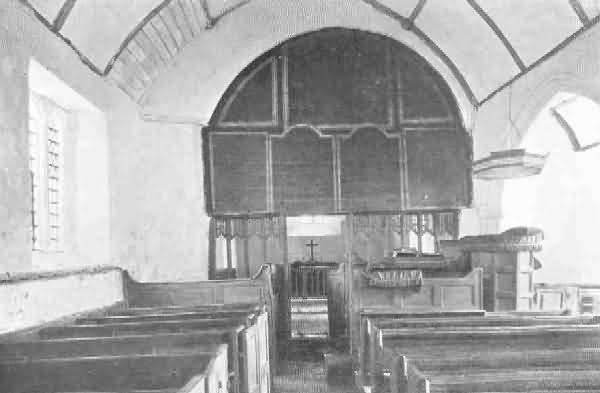
The church [plate 179a] consists of chancel, nave, south aisle, south porch, and west tower. There were originally three bells, one recast in 1655, another in 1669, and the third in 1743, these bells have been removed to the new church in the village. The oldest parts of the church are Transitional Norman. The chancel is possibly Early English, the south aisle is Perpendicular. The principal object of interest is the screen, this and the screen at Molland are, as far as I know, the only examples we have left in Devonshire of the complete chancel enclosure of the post-Reformation type. The screen [plate 179b] consists of narrow rectangular lights, four on the north side, six on the south of the chancel door; over this is the tympanum filling the chancel arch, on this are hung paintings of the arms of one of the [King] Georges, the Commandments, the Creed, the Lord's Prayer, texts, and the names of Walter Lock and Richard Harton, who were churchwardens in 1758. Mr. Bligh Bond says that in 1780 the rood beam was in existence, and was then cut up for the purpose of making bench-ends, but there is still a beam in situ above the screen which may have been a rood beam. This church is a typical example of what our parish churches looked like a century or more ago [i.e., before 1810]. Here is the old «three-decker» pulpit with sounding board [plate 179c], the altar enclosed with rails on three sides, horse-box pews, and raised seats at the west end of the nave for the choir, with holes cut in the pew front for the accommodation of the player of the bass-viol. The Transitional Norman font has been transferred to the new church, and the old church is only used occasionally in the summer months. Unfortunately early in 1908 the church was struck by lightning and much damage done. The tower was cracked, the pulpit and screen split, and the interior of the church almost ruined.
|
||||||||||||||||||||||||||||||||||||||||||||||||||||||||
| PINHOE. St Michael and All Angels |
Originally it is probable the
church was full of ancient oak benches with handsomely
carved ends, unhappily only one of these, that immediately
below the pulpit, remains. A unique object in the church is
a curious statuette, about 2 feet high, representing the
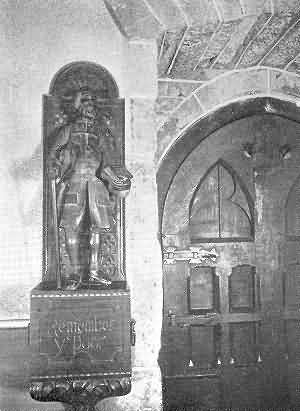
parish beadle in the time of Queen Anne [1702-1714]. He
holds a staff in his right hand and two books in his left,
on the corner of the top of one the words "Ye poor man of
Pinhoe 1700" are inscribed. He stands on a strong alms
box which is of very recent date [plate
182c].
|
||||||||||||||||||||||||||||||||||||||||||||||||||||||||
| PLYMTREE St. John the Baptist. |
There are some beautifully
carved bench-ends in the nave of 15th century date, and in
the south aisle are some pews of the old horse-box pattern.
|
||||||||||||||||||||||||||||||||||||||||||||||||||||||||
| POLTIMORE. St. Mary. |
The church [plate
188a] consists of chancel with priest's door, nave,
north and south transepts, south aisle, north porch, and
west tower containing six bells. At the end of the aisle a
gallery has been erected which abuts on the screen and cuts
off the light from the south transept window; it would be
well if this could be removed, as it is a disfigurement to
the church. The gallery, which is the property of the
Poltimore family, is reached by a wooden staircase through a
door in the aisle.
|
||||||||||||||||||||||||||||||||||||||||||||||||||||||||
| ROCKBEARE. St. Mary. | The old west gallery has been removed and portions are preserved in a screen behind the organ, forming an enclosure for the vestry. | ||||||||||||||||||||||||||||||||||||||||||||||||||||||||
| SAMPFORD COURTENAY. St. Andrew. |
In 1898 restoration of the
church was commenced, the pillars were taken down and given
new foundations, and the nave roof was renewed, but almost
the whole of the old carved woodwork was preserved. The west
gallery was removed and the high pews.
|
||||||||||||||||||||||||||||||||||||||||||||||||||||||||
| SANDFORD. St. Swithin. |
There is an old 17th century gallery at the west end, it was built in 1657; the front, which is elaborately carved, is divided into many arched and pillared Jacobean panels, separated by thick consoles of inverted acanthus, supporting an ornamental cornice; the gallery extends on each side slightly up each aisle. It was built by the second Sir John Davie of Creedy. The church was practically rebuilt in 1523, and again restored in 1847-48 at a cost of over £2,000; the clerestory was added at this time.
|
||||||||||||||||||||||||||||||||||||||||||||||||||||||||
| SATTERLEIGH. St. Peter. |
The altar is surrounded on
three sides by railings, and against the wall on the north
and south sides are seats for the communicants, with pegs
over on which to hang their hats; there are also hat pegs on
the north wall of the nave. Strictly speaking there is no
chancel arch, the division between the chancel and nave is
formed by a partition, reaching from the roof down to the
level of the top of the windows, in front of this partition,
on which are painted the Lord's Prayer and the Creed, the
roof is panelled with oak with carved bosses. I think we
have here another instance of the complete shutting off of
the chancel, as at
Parracombe and
Molland.
|
||||||||||||||||||||||||||||||||||||||||||||||||||||||||
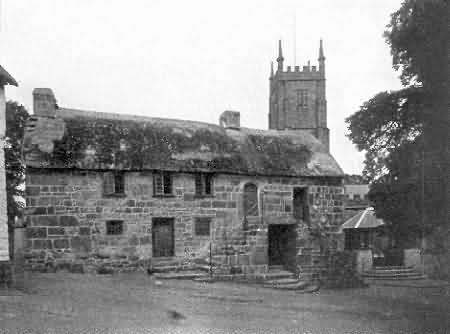
| SOUTH TAWTON. St. Andrew. |
The west gallery was removed
in 1881. Just outside the lychgate
is the old Church House [plate
212d], one of the finest in Devonshire, which dates from
the 15th century. These church houses were invariably
invested in trustees for the general use of the church and
parish, and did not belong to the vicar or rector as part of
the benefice. In early times in England it was the custom to
hold church-ales and bid-ales within the church. The
Puritans, with more reason than for many of their
objections, tried to do away with the custom, and church
houses were provided where these feastings could be carried
on without offending the feelings of those who considered it
inappropriate that celebrations of this kind should be held
within the walls of God's house. Although in the time of
Elizabeth [1558-1603] these church houses were numerous, for
long after the Reformation [ca. 1550] the «ales» were held
in the church; [Phillip] Stubbs, writing in 1583, states
that the malt liquor provided for the church-ales, no less
than the drink brewed for wakes, was broached, drawn, and
sold within the walls of the churches.
|
||||||||||||||||||||||||||||||||||||||||||||||||||||||||
| SPREYTON. St. Michael. |
The
panelling along the nave walls are thought to be the remains
of previous 'horse-box' pews.
|
||||||||||||||||||||||||||||||||||||||||||||||||||||||||
| STAVERTON. St. Paul de Leon. |
The rood screen extends across
the nave and aisles and is 56 feet 7 inches in length
[plates
214a and
214b]. In 1897 it was found that the beautiful 15th
century carving of the screen — in fact the greater part of
the screen — was in a very dilapidated condition, and it was
decided to restore it, and to add a gallery front, the
original one having gone the way of so many others, which
were destroyed in the reign of Queen Elizabeth [1558-1603]
by order of Archbishop Parker [elected 1559]. There were
sufficient remains of the old gallery in existence to
determine the height, but not enough to enable the original
design to be reproduced, so the screen in the north aisle at
Atherington was taken as a pattern for the new gallery.
|
||||||||||||||||||||||||||||||||||||||||||||||||||||||||
| ST. JOHN-IN-THE-WILDERNESS. |
This was originally a large
church and the mother church of the district; it is said to
have been called St. Michael's Chapel in the reign of Henry
VIII [1509-1547]. The greater part was pulled down in 1778,
and all that is now left is the north aisle [plate
216] and the west tower; the latter up to a year or two
since [ca. 1908] was covered with ivy and formed a
picturesque object, but the ivy has now been removed.
It is easy to imagine a west gallery quire and band here.
|
||||||||||||||||||||||||||||||||||||||||||||||||||||||||
| TORBRYAN. Holy Trinity. |
The
church is of Perpendicular style, built at the end of the
14th century in place of an earlier building. It consists of
chancel, nave, north and south aisles, south porch with
parvise and fine vaulted ceiling, and embattled west tower
containing four bells, all with inscriptions in Old English
and Roman characters. Portions of
the chancel and the east end of the aisles are parts of the
older church. The majority of the windows still retain the
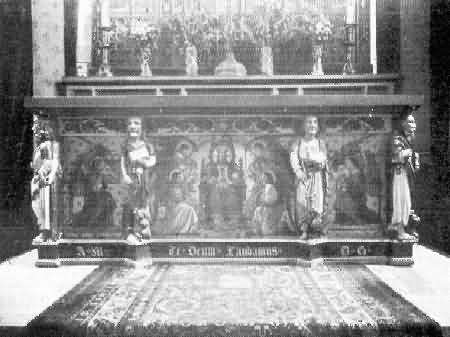
old glass of 15th century date. The rood screen is Perpendicular and is adorned with foliage and tracery [plate 236a]. The lower panels retain their ancient paintings; on the chancel doors, the Coronation of the Blessed Virgin Mary. Many of the saints represented are rare, such as St. Catherine of Siena [Italy], who is only found here and at Portlemouth, a priest arrayed in a red chasuble, supposed to be St. Armil of Ploermel, in Brittany, elsewhere he is found in the Henry VII Chapel, Westminster. Here also will be found a saint with a ladder, said to be St. Emmeran of Ratisbon [Upper Bavaria, Germany], St. Vincent holding some cups, a napkin and a book; a female figure stripped to the waist, her breast pierced with arrows (called by one authority, St. Sebastian, but by Dom Bede Camm, St. Ursula, the latter is most probably correct, as it is evidently a female figure); St. Matthew, St. Mark, St. Luke, St. John, St. Andrew, St. Philip, St. Jude, St. James the Great, St. Simon, St. Thomas, St. Bartholomew, St. Veronica, the Blessed Virgin crowned, St. Lawrence, St. Cecilia, St. Barbara, St. Apollonia, St. Dorothy, St. Syth, St. Ursula, and others, altogether there are about 40. The painting of the figures has not been restored. There is a magnificent altar of richly carved 15th century work, from the character of the details it seems likely that it is constructed of remains of the rood loft gallery front; Box pews:
|
||||||||||||||||||||||||||||||||||||||||||||||||||||||||
| TORRE, TORQUAY. St. Saviour [All Saints]. |
Beneath the west gallery in the floor of the nave, partly covered by pews, is a gravestone with ledger line, the inscription as far as can be read is:— Here lyeth
the body . . . . Martin Chilson "In time of
life a virtuus Wife 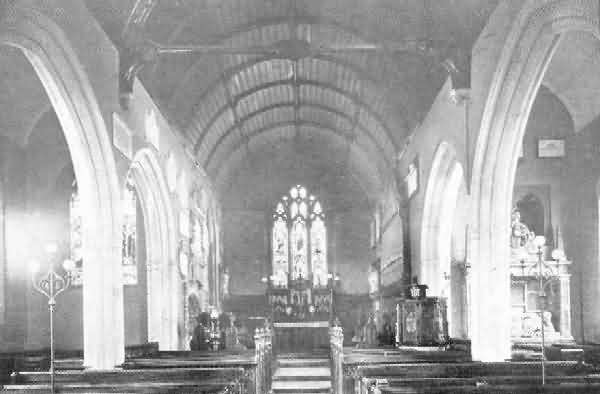 |
||||||||||||||||||||||||||||||||||||||||||||||||||||||||
| UFFCULME. St. Mary the Virgin. |
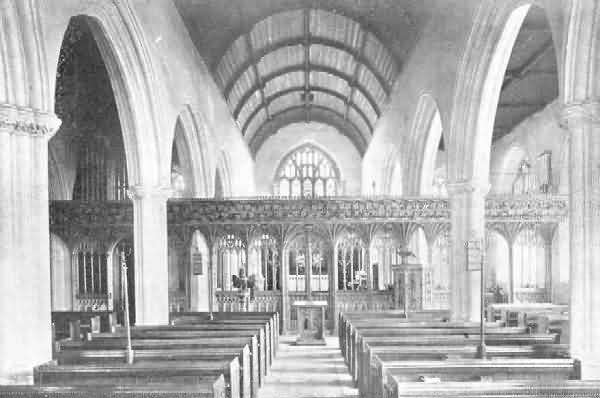
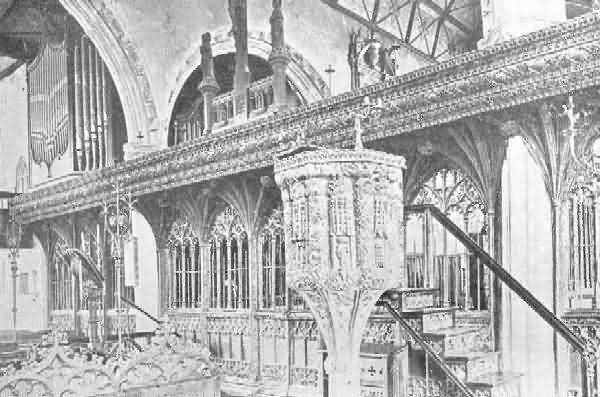
The rood screen [plate 241] is the longest in Devonshire — 67 feet. The type is rare, the tracery very like that at Halberton. The portion across the south aisle is new, but has been well copied from the old. The pulpit dates from 1719: the carved panel in front evidently does not form part of the original pulpit. There is an organ gallery at the west end of the nave, the Jacobean front and side are said to date from 1627. The font, reredos, and east window are comparatively modern, 1843. The stone altar is probably of the same date. 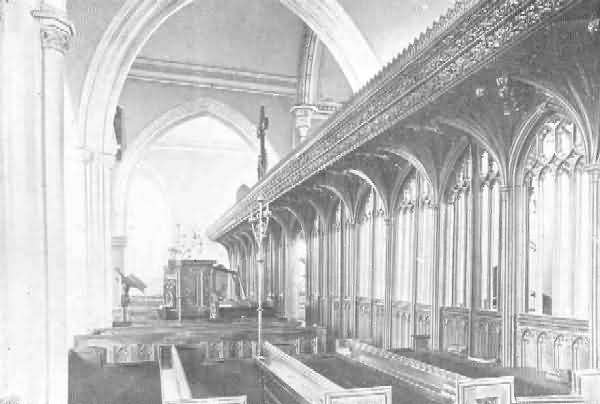 |
||||||||||||||||||||||||||||||||||||||||||||||||||||||||
| WIDECOMBE-IN-THE-MOOR. St. Pancras. |
Included here because of the known manuscripts of quire music which still exist. See Praise & Glory, WGMA, Oxford, MM. The church is cruciform in shape and consists of chancel, nave, north and south aisles, north and south transepts, south porch, and a tower which is the glory of Dartmoor; it contains six bells of various dates, the earliest 1632, and is said to have been erected by some tin miners as a thanks offering for their success in finding tin. There is a well-carved roof with many of the original bosses: one has a goat, another a lion, a third the pelican, a fourth three rabbits, each with a single ear uniting in the centre to form a triangle, supposed to be an emblem of the Trinity; other explanations have been given of this symbol, one being that it is an alchemical symbol called the «Hunt of Venus». The tower was erected and the church enlarged in 1537. The church is so large, it has been called the «Cathedral of the Moor», in winter the larger portion of the nave is screened off. The rood screen [plate 253a] has been cut down to the sill level; on the lower panels are a good series of paintings including St. Apollonia, St. Sebastian, St. John, St. Philip, St. Matthew, St. Jude, and St. Thomas. In the north and south transepts are old paintings of Aaron [plate 253b] and Moses. On Sunday, October 21st 1638, during a terrific thunderstorm, the church was struck by lightning. In his Worthies of Devon, Prince gives the following account:— "In the afternoon in service time, there happened a very great darkness, which still increased to that degree, that they could not see to read, soon after a terrible and fearful thunder was heard, like the noise of so many great guns, accompanied with dreadful lightning, to the great amazement of the people; the darkness still increasing, that they could not see each other, when there presently came such an extraordinary flame of lightning, as filled the Church with flame, smoke and a loathsome smell, like brimstone; a ball of fire came in likewise at the window, and passed through the Church, which so affrighted the congregation that most of them fell down in their seats, some upon their knees, others upon their faces, and some one upon another, crying out of burning and scalding, and all giving themselves up for dead. There were in all four persons killed and sixty-two hurt, divers of then having their linen burnt, tho' the outward garments were not so much as singed. ... The Church itself was much torn and defaced with the thunder and lightning, a beam whereof breaking in the midst, fell down between the minister and clerk, and hurt neither. The steeple was much rent, and it was observed where the Church was most torn there was the least hurt was done among the people. There was none hurt with the timber or stone, but one man who, it was judged, was killed by a fall of stone." 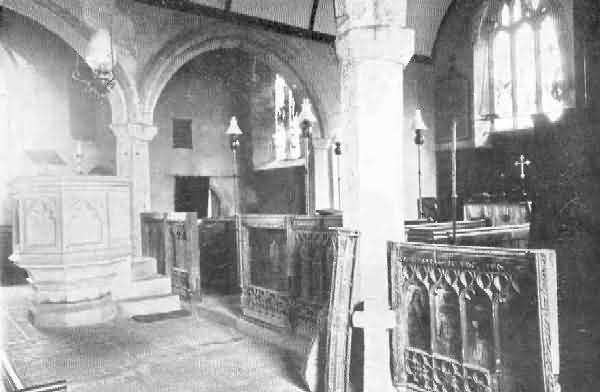 |
||||||||||||||||||||||||||||||||||||||||||||||||||||||||
| WOODLEIGH. St. Mary. | The church has been restored, and the west gallery which contained an old barrel organ has been removed. The chancel screen is also conspicuous by its absence, but this was probably demolished at an earlier restoration. The modern organ is now in the north transept. | ||||||||||||||||||||||||||||||||||||||||||||||||||||||||
| Asterisks denote churches in preparation | |||||||||||||||||||||||||||||||||||||||||||||||||||||||||
|
|

